Sex, Intimacy, and OCD
/Many people who struggle with OCD often have difficulties with their sexual health. I want to take a moment to review some of the literature on this topic and discuss the current treatment recommendations.
Read MoreMany people who struggle with OCD often have difficulties with their sexual health. I want to take a moment to review some of the literature on this topic and discuss the current treatment recommendations.
Read MoreWalking into my childhood bedroom, I was confronted by walls covered in fluorescent highlighted psychology notes. a shrine to the person I used to be. Someone who sacrificed breaks, friendships, and peace of mind in pursuit of being the best. That dedication helped me become the clinical psychologist I am today, but it came with a price I'm still calculating.
Now, sitting across from high achieving professionals and executives in my practice, I see my former self reflected back at me. They share the same struggle: how do you let go of behaviours that have brought you success? The truth is, many don't want to let go. And that makes sense, perfectionism has delivered results, accolades, and accomplishments. But here's what I've learned both personally and professionally: perfectionism doesn't always work, and eventually, it stops working altogether.
The real question isn't whether you need to settle for being average, it's whether you can embrace being extraordinary instead. There's a crucial difference. Being extraordinary means being the best version of yourself without sacrificing your values, your health, or the relationships that matter most. It's the difference between burning out and burning bright. And while my perfectionistic tendencies still creep back in, I've discovered that awareness and alignment with my values help me redirect toward something more sustainable and ultimately, more fulfilling.
If you're reading this and recognizing yourself in these words, know that seeking help isn't about becoming less than you are. It's about becoming more of who you truly want to be.
Read MoreDue to the request of many who messaged me, I have decided to publish this article early. I am still editing and adding to it, hope this helps. The article outlines how I work with my patients who struggle with genital staring OCD.

Read More
Exposure and Response Prevention (ERP) remains a cornerstone in the treatment of anxiety disorders, yet certain phobias—such as emetophobia and needle phobia—pose unique challenges due to the rarity or impracticality of real-life exposure scenarios. As therapeutic landscapes evolve, technology is proving to be a powerful ally in bridging these gaps. From client-recorded video exposures to immersive simulations, digital tools are enabling therapists to creatively extend ERP beyond the therapy room. This article explores how clinicians can harness these tools to facilitate habituation, deepen self-reflection, and tailor exposure work to complex fears, ultimately supporting clients in confronting and reframing their most distressing experiences.
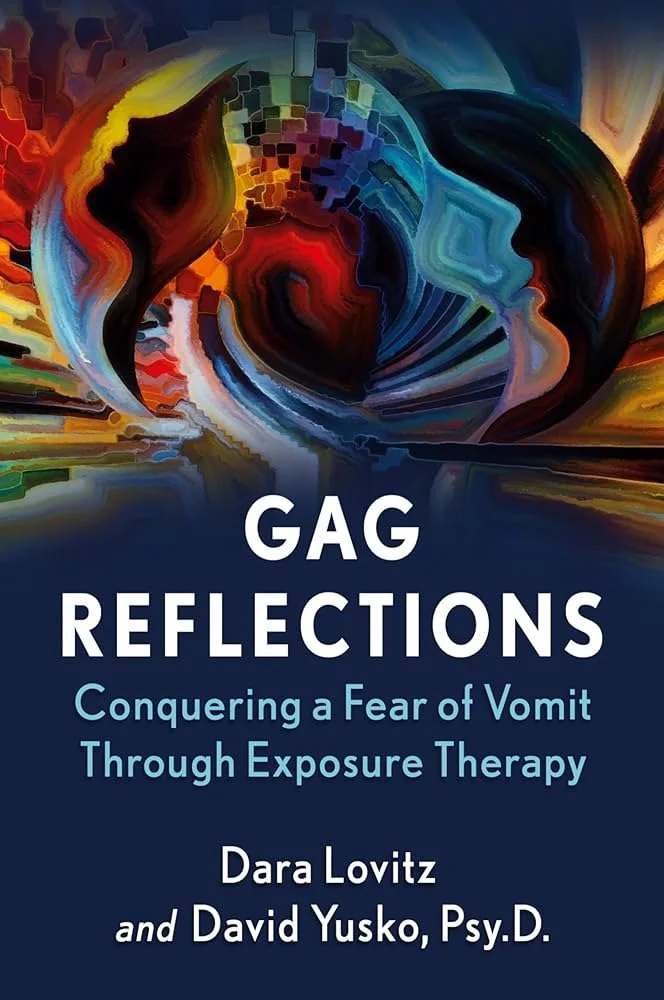
In my review of Dara Lovitz and David Yusko’s work, The Gag Reflections, I recognize both the strengths and limitations in their approach. Dara's treatment journey offers hope and inspiration, especially for those dealing with emetophobia. However, I believe there's a critical element missing in their conceptualization of her condition.
Read MoreThe purpose of this article is to enhance your understanding of burnout, become familiar with the symptoms of burnout, and help you obtain the right tools to evaluate if you are experiencing difficulties with burnout.
Read MoreAre you anxious during the holidays? It could be because you are feeling overwhelmed. This article explores how best to challenge those feelings and set boundaries around your holiday routine.
Read MoreThis article explore how choice to act on a harm related thought is influenced by desire, value and need. For someone to act it must satisfy one of the three. The article explores how desire, value and need are considered when making a choice. The article is intended for those who struggled with harm related OCD or pedophilic OCD.
Read MoreA brief description on how your OCD and Anxiety related concerns may be shaping other areas of your life without you even being aware of it.
Read MoreSometimes it can be difficult to figure out what to talk about when a client is performing an exposure exercise during your session. Solution Focus Brief Therapy (SFBT) techniques can be implemented during an exposure and may help improve patient engagement and motivation. Find out how to combine SFBT with Exposure and Response Prevention.
Read MoreThere hasn’t been much mention of how Sluggish Cognitive Tempo (SCT) may influence OCD symptoms for individuals who experience difficulties with genital staring. I attempt to write a brief overview of how I believe SCT may be best to be treated first before engaging with traditional OCD therapy.
Read MoreThis article explores the difference between an impulse and an urge, which could help in the assessment and diagnosis of comorbid conditions. The article also provides important education for patients who may struggle with urges that they believe may be potentially harmful.
Read MoreBuilding self-confidence in yourself is essential in learning to live with uncertainty. This blog post features key points on how to build self-confidence that may help you on your road to recovery. The blog post discusses how to use effective self-talk, how a critical voice can influence increases in anxiety, how learned helplessness can shape your feared consequences, and how to nurture yourself throughout your recovery journey.
Read MoreAlmost two decades ago, impulse control disorders (ICD) was a part of the obsessive compulsive spectrum (Grant et al 2006). How clinicians conceptualize OCD and impulsive control disorders are quite different now. Impulse issues have long been a source of frustration for some individuals with OCD. Many people who have OCD (not all) often struggle, not knowing if their urges will eventually turn into behaviour that will implicate them in the future. For instance, a person with Harm OCD may struggle with the urge to grab a knife and hurt a family member or a person with Incest OCD may become anxious with sexual urges around their siblings. What we are aware of now is that there isn’t a significant overrepresentation of impulse control disorder symptoms in OCD patients. Despite OCD patients reporting urges and impulses, there are clear distinctions that are made that separate OCD patients from those with impulse control issues.
Read MoreThis article was written for the purpose of providing a resource for family members who are struggling with how to manage caring for an individual who experiences difficulties with anxiety or OCD.
Read MoreMany of us have clients who attend therapy somewhat interested in the process. This can create conflict and negatively influence treatment outcome. This article explores some areas of consideration when working with non-compliant clients.
Read MoreMany clients experience difficulties finding the time to devote to exposure exercises. This article explores why long-duration exposures are more important to treatment outcome than short-timed exposures.
Read MoreYes, there is such a thing as unproductive coping! Many of us struggle with coping and managing in a way that could actually make our anxiety worse. This article explores why we should be aware of unproductive coping and how it could be negatively influencing our anxiety and OCD symptoms.
Read MoreA clinician’s review of Sally Winston’s text, Overcoming Unwanted Intrusive Thoughts. A excellent resource for those who may be struggling with intrusive thoughts.
Read MoreA book review for those looking to refer or use this book as part of their healing journey. Find out what I didn’t like and liked about the text.
Read MoreWe are constantly working to raise the bar on our services. If you have any questions, feel free to email us.. We are sometimes hard to get a hold of and we ask for patience. . Otherwise, leave a message and we will get back to you.
Call us and say hi!
Call: 647-360-7759
OCD and Anxiety Clinic of Ontario
205-4000 Steeles Ave W
Vaughan, ON
L4L 4V9
Telephone: 647-360-7759
Fax: 647-259-8796
Open: Monday to Friday - 9am to 5pm
By Appointment Only